Showing posts with label Places. Show all posts

Tuesday, July 19, 2011

Mt Etna: a new spectacular eruption


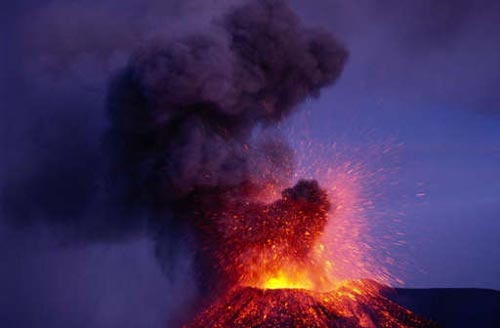
She, the mountain (à muntagna as we call it in Sicily), woke up again.
A new spectacular eruption took place last night.
Watch it out!

Wednesday, November 25, 2009

Baroque nights


“Are we going by vespa?  There might be no parking there” Vincenzo says while deciding which shirt to wear. He knows I love moving by my vespa. A car is an option for me for long distances or when storming.  We also are late for our funky birthday party at centro storico (1).

Late November  and we are still blessed with mild weather. Not much traffic. We are driving slowly, enjoying a warm breeze over our faces. As we approach its historical center, the black lady appears with its lava stone Baroque-style palazzos, the ruins of its Greek and Roman theatres emerging from the decadent atmosphere of the narrow streets, built after a Mt Etna devastating eruption and a disastrous earthquake wiped out most of the town in 1669 and 1696. For our Baroque-style, we have been listed on the UNESCO World Heritage list. I’m afraid we do not fully understand the importance of such an honourable mention, nor our politicians use it to enhance our touristic potential. Our indolence is stronger than our shrewdness.  


“Audrey Hepburn and Gregory Peck are just arrived, guys!” Jerry shouts out hilariously,  looking at us arriving on the back of my vintage-style moped-saddle. Somehow, we remind him of the Oscar winning movie Roman Holidays starring Gregory Peck and Audrey Hepburn riding a vespa in Rome.


The best part of driving a vespa is you can easily free yourself out from our heavy traffic and park wherever you need. So, I’ve  parked just down the scalinata Alessi, where the Niewsky, our party venue, stands halfway along the flight of steps. One of the few real institutions in town, a very unusual place for a birthday party, it matches our freakish guest of honour well. 
 
“This place still retains the same Che Guevara-Buena Vista Social Club-smoky-shabby atmosphere it had in late ’80s” Enzo notices while greeting old and new friends. It was back on 1986 when Saro, its out-and-out communist  owner, opened the Niewsky, the first pub in town, giving rise to a new trend of reclamation and renewal for our centro storico. In a short period of time, the youth seized the area, clubs and restaurants invaded smoothly the sleeping Baroque buildings. Nightlife rescued our streets from blight and crime, the local movida was so intense and vibrant to be compared to the Madrilenian one. This was the primavera Catanese,  a sort of permanent spring which gave the city and its people pride and identification for about a decade.  


It’s Thursday night and both the Niewsky and scalinata Alessi  are packed with people.  Indoors, men and women around their  ‘40s having their organic dinner, no Coca Cola, only red wine sipping. Outdoors, students camping out along the steps drinking beers and mojitos. Our Baroque nights speak a blend of European languages; Italian, Spanish, English, French. The Erasmus exchange project among UE universities  for students’ mobility is the tangible heritage of our primavera Catanese.
Memories flow back to my Erasmus experience in Rotterdam in ’93 and I feel like suffering from Peter Pan’s syndrome of eternal youth.


Gripped by misrule and impasse today, Catania goes through a very difficult period. But its nights still throbs with life.


(1) Centro storico = historical centre

Tuesday, September 29, 2009

Make couscous, not war!


When food acts as a powerful mean of cultural integration the outcome is an explosive mixture of food, music, live shows, wine tasting, artists, local people and people from everywhere all joining together to "make couscous, not war".
The chosen place for this colorful and tasty melting pot was San Vito lo Capo, Western Sicily, close to Trapani and Erice area, a seafaring village with blue and crystal clear sea waters and a beautiful white beach, an ideal place to extend your holiday and enjoy the relaxed atmosphere of an early fall vacation.
Five days entirely devoted to King Couscous, a dish rich in history and open to the future, synthesis of cultures, symbol of opening, broadmindedness and cross-culture contaminations.
Chefs from Ivory Coast, France, Israel, Morocco, Tunisia, Palestine, Senegal and Italy challenged each other to prepare the best couscous of all, no matter if fish-based or meat based or with vegetables, no matter if traditional, exotic or with a haute-cuisine touch. Italy won, but this is of minor importance.

What was really striking was the atmosphere of real feast and joy you felt everywhere, anytime.
At the Gastronomic Village where you could chose among four different couscous houses: the San Vitese one, to taste the local version; the trapanese and Maghreb one, to taste couscous from Trapani; the Mediterranean one to be delighted by couscous made by countries overlooking the Mediterranean Sea and the worldwide one to enjoy exotic versions from all over the world. You ate, you drank, and ate and drank and never had enough. It's always like this every year, since the first edition of the event, and every year is always better.

At the Couscous Lab, true culinary workshops led by Sicilian Master Chefs. We was particularly amazed by the one focusing on Alaska couscous made with salmon. It was introduced in Sicily by returning Trapanese emigrants who sought their fortunes far away from home in the cold Alaska lands. We really learnt a lot. Master Chefs were Pino Cuttaia, Ciccio Sultano and my very good friend Carmelo Chiaramonte, a spotlight chaser and a great chef. We enjoyed workshops very much.
At the Expo Village, a colored market, a lively souk, a good chance to discover the identity of the eight countries entering the competition through their handicrafts and people.At the Al Waha, the lounge area nearby the sea, its name meaning "desert oasis", a chic and trendy place where contaminations among music, tastings and relax take places.

At the Live Shows where music prevails with a different artist every night for contaminations of sounds, tunes and visions from all over the world.


Despite the weather was not that indulgent for most of the time, people were not intimidated and participated heavily especially during the weekend. From 12.00 am to 24.00 people coming widely from Sicily, Italy and even abroad shifted here and there trying not to miss anything: a dip into the crystal sea, strolling around the booths trying to discover that unique ethnic gadget, tasting wines and food, enjoying meeting friends sipping a glass of whatsoever and listening to the artist on stage that night.


That's what we did. The seven of us all together or each on his or her own, distracted by everything on our way along the weekend, holding forth on culinary questions, on that unusual ingredient, on how we liked or not this or that couscous, on our personal version of the dish, all of us being pretty good cooks with a sane sense of friendly rivalry. We had a good laugh.


We met people from UK, France, Germany, Ireland, Sweden, Spain as well as representatives of the 8 official countries.
George and Liz, from Richmond, south-west London (I lived in Richmond during my teens!) were truly amazed by the huge quantity of people, food and were impressed by the common sense of sharing and participation.
We all sensed how integration was naturally felt and not forced; food was only a very good and tasty excuse.


Wednesday, August 19, 2009

Golf, food, wine and Europe's largest active volcano: a weekend out at Palmerston Golf Etna & Spa


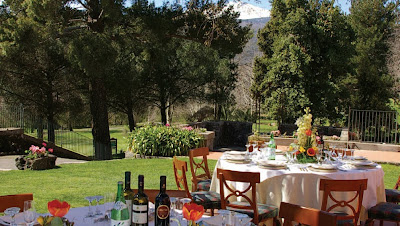
To inaugurate our so eagerly awaited summer break from a very hard month (and a very hard year!) we (some friends, Enzo and I) decided to spend a weekend on Mt. Etna, the largest active volcano in Europe. Close to home, about 30/40 minutes driving, a beautiful area that of Castiglione di Sicilia, located on the north-east side of the volcano, a Medieval village which still retains a certain charm in its old centre. An area where vineyards and wineries shape and define the landscape, surrounded by black cold lava flows and hazel groves, which make this part of the volcano one of the most interesting in Sicily for its oustanding wine production. A natural setting like no other.

Dominated by the white cap of the 3300 mt central crater of Mt. Etna, stands the imposing figure of the Palmerston Golf Etna & Spa - recalling somehow the old massive lavastone farms so widely diffused at the foothill of the volcano - surrounded by vineyards, orchards and hazel groves and facing on the back some awful uncompleted villas which sadly brutalize the gentle and overbearing view.

There was a specific reason for chosing the Palmesrton Golf Etna and Spa during those days from August 8th to 10th: on the occasion of St. Lawrence some nice events were planned in the area as the hotel management was organising a wine and food tasting on Aug 8th while the Municipality of Castiglione di Sicilia the annual "Calici di stelle" on August 10th.
Is there anything better to start your holidays enjoying nice folks, delicious food, drinking quality wines and gain all this thanks to a special offer the hotel decided to place on the market trying to revitalize their August attendance?


At arrival, the staff at the lobby gave us a warm welcome and the key of our room on the first floor (the hotel has two). Equipped with just two travelling bags, we kindly refused the help of the bellboy and run to our room as I cound't wait to relax at their Temple Spa. Our room was comfortable enough but not that large, with a small terrace and enchanting view both over the top of the volcano and a nearby vineyard abrutptly interrupted by those awful uncompleted villas (and which should be part of the hotel once finished to attract passionate golfers and business men).
Furniture is a bit disappointing but the interior decoration is embellished with quality curtains and superbe original paintings and drawings by Maria Leonardi Pennisi, a local painter and one of the owners of the estate). The whole hotels shows more than 700 of her paintings and I'd loved to buy one but - poor me - none was available.
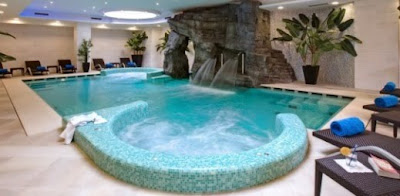
Chilling out in the calm and sober-styled Temple Spa was exactly what I really deserved and desired most.

Despite the lack of useful and professional information given by the person in charge on duty, we indulged for 3 hours doing all our personal try-outs of all those therapies and treatments included in the fee which grants your access to the Spa: colour therapy and aromatherapy showers, hydrotherapy pool with jacuzzi, sauna and hammam, a zone for relaxation with chaise longues, magazines, herb teas and infusions. We only missed to try massages as the only masseuse on duty was fully booked and - shame! - we did not in advance.
Restored from all this, I was ready for our first gourmet date just that evening right there at the hotel, so no effort to reach the lawn where everthing was settled for a perfect tasting event, its evocative title being "2009 Taste Routes: wine, oils, flavours": a rich seventeen course buffet menu (yes, 17! Just to count some: from typical summer soup with peas and broad beans, to, home-made macceroni pasta with a strong meat ragout, to a selection to Sicilian cheese deliciously matched with honey, jams and wine jellies and more ... two variants of cou-cous, one with vegetables and one with meat as a tribute to our Arab heritage, then tagliata di tonno, a sort of thinly sliced grilled tuna steak with sweet and sour red peppers as side-dish, plus ... a dainty black pork from the Nebrodi Mountains on the spit, and three different type of desserts among which my favourite one, a Malvasia wine aspic with  sweet-smelling local peaches and again ... a final surprise for all the bystanders a sumptuous chocolate tasting which was definitely th knockout blow for all of us! ), all rigorously local ingredients, each dish matching a great Sicilian wine for a total of 15 different wineries representing the best wine-making Sicily can offer. The food and the selection of wine was superb, I cound't eat all 17 courses but the whole group did and this was the final response. The service was not that great, actually needed a bit more of coordination and staff.
A very professional jazz trio refined the atmosphere with the right music and the right voice, a gentle woman with a vibrant and emotional touch. It was one of those rare events where the right people is exactly at the right place and everyone truly enjoys each minute of it.You could easily breathe the feeling of full satifaction and total pleasure delivered by participants' attitude, no matter if they were 9 or 90 (two kids od ten shared our table and my God! They ate all courses with such a qualified appetite to dliver now and then their personal and fun opinions as authorities on food! I was truly amazed  and a bit envoius they had space enough for everything and I didn't ... or coundn't!).
I coudn't exempt from congratulating the management for such a pleasant evening and promise not to miss the next one on 2010.
The next day was entirely devoted to hanging out at the pool (why no bar there ...we waited for one hour before the bartender delivered our drinks), except for time devoted to meals.
Breakfast was not you would espect from a 4* hotel which would like to attract skilled travellers from all over the world both in terms of quality, quantity and presentation of food, expecially if compared with the night before.
We had lunch at the club house of the golf course as the hotel restaurant was closed. A' la carte menu was really basic, dishes not always well-cooked, wine was terrible and quality of service sufficient. But, prices were adequate and the atmosphere very relaxed.
Somehow it may sound clashing with positioning the managment aims to and clients' expectations but all in all you fell comfortable and make no effort to adjust yourself quite easily.
Now, folks, do you think my friends there at the Palmerston Golf Etna & Spa, the hotel manager Filippo Catania and the sales manager Federica Eccel, will continue to talk to me?


Sunday, July 19, 2009

Lunch with two Norwegian girls in an Albanian speaking village in Sicily


We met Kjersti and Susann at the end of June at Trattoria San Giovanni in Piana degli Albanesi, western Sicily. It was lunchtime. We popped in during a weekend entirely devoted to visit wineries, farms and relais de charme around Palermo countryside. Kjersti and Susan were sitting on a table in the terrace enjoying their typical home-made Sicilian meal, happily satisfied. We sat in a table nearby while Gina, the owner and co-chef of the trattoria, was trying to talk to them in Italian with a certain Tuscany inflexion, the two girls keeping smiling at her nodding politely in assent but with their eyes wondering "what?", the opposite table with thr
ee local gentlemen speaking a strange dialect, no way to understand it even for us, native-Sicilians.

That's how we met the two happy Norwegian girls having their two week holiday in Sicily, who happened for chance at the trattoria while driving south to visit Corleone (I guess for its appeal related to The Godfather trilogy and everything connected with the mafia, poor us!)
Those were funny circumstances. Except the two girls, none spoke Norwegian. They did not speak Italian, Gina - the affable owner - did not speak English but somehow they could understand each other. We speak English so we could enjoy a nice talk with Kjesrti ans Susann providing them with some tips for the rest of their fly and drive voyage in Sicily. We did not speak that strange language the gentlemen nearby were spoken but they could speak and understand Italian.
So, what language were the gentlemen speaking? Believe or not, ancient Alb
anian! They were Piana degli Albanesi natives. This is a small town in the countryside of Palermo where an Albanian community lives and still maintains its native language, although mixed with some Sicilian influence, since the end of the XV century when they arrived in Sicily after the invasion of the Balkan peninsula by the Ottomans. Along its street you can read road and traffic signs both in Italian and Albanian so I learnt that the Italian word Municipio (Town Hall) becomes Berska in Albanian.
For those travelling in Sicily, Piana degli Albanesi is worth a visit mostly during Easter time for its fascinating and picturesque Ortodox Easter procession with traditional Albanian costumes attracting visitors from all over. In Piana, you can easily see people eating a cannolo, as this typical Sicilian kind of pastry, an engaging and surpirisng dessert filled with ricotta cheese, is absolutely the quality trademark for this village. So, keep in mind to have one while visiting (and one is more than enough!).
Piana degli Albanesi is also famous for several important events in the history of Sicily and Italy and alas! for the sanguinary massacre at Portella della Ginestra by a gang of bandits lead by Salvatore Giuliano: on May 1st, 1947 they killed a mass of defenceless people celebrating Labour Day. The story of the bandit Salvatore Giuliano is very interesting and is worth more investigation for being him the first promoting the independence of Sicily. But this is another story.

Lets' keep back at our main one. Don't forget to have your meal at Trattoria San Giovanni welcomed by Gina and Vincenzo, wife and husband, running together the place with their home-made cuisine rich of Sicilian flavour and ingredients. This amiable Tuscan lady moved to Piana degli Albanesi 45 years ago, to follow her love for Vincenzo. Isn't this such an old-style romance?

As first course we had superbe home-made fresh pasta dishes: panzotti di ricotta al finnocchietto selvatico con pomodoro a pezzi, melanzane e ricotta salata (panzotti pasta filled with ricotta cheese favoured with wild fennel with rustic tomato sauce, fried aubergines and salty ricotta cheese) and tagliatelle al pistacchio (tagliatelle pasta with pistachio sauce). They use an extra-virgin olive oil which is so smelly and pure you can enjoy it simply with their fresh bread.

As second course we had involtini di melanzane arrostite con mortadella, sottilette e foglie di alloro (roasted aubergine rolls filled with mortadella cut and cheese and flavoured with laurel leaves) and salsiccia locale arrosto con finocchetto selvatico (local roasted sausages flavoured with wild fennel).

What a delight for our senses! The whole meal was so simple and so perfect in taste you could not ask for anything else. There is no need for haute-cuisine or Michelin star restaurants when you experience such a local delicious food!

Sunday, March 29, 2009

Easter or theatre?

Is there any other place in the world where feast and theatre are strictly weaved together to celebrate the Holy Week? If yes please, I would like to know.

I've recently made a plan for some friends of mine coming from US and willing to travel to Sicily during Easter holidays. I suggested them to visit those villages and towns where those days going from Palm Sunday to Easter Day are plenty of both sacred and profane rituals. A very unsual journey into the hidden atmospheres of the Christian faith and the theatrical celebration of Easter.

I sent them some pictures and links about places and performances and ... they were shocked! Excited! Exhalted by the idea of actively participating to those celebrations both as actors and audience, as most of the local people do!

Every town and every village participates to Easter feasts with its own rituals deriving from usages and customs, from ancient traditions in which it is not always possible to find out origins and motives.

The list of those places is rich but I would like to mention some of the most interesting ones, those I find most picturesque and fanciful:

- The Holy Week in Enna with its climax on Good Friday
- The Procession of the Misteries in Trapani again with its peak on Good Friday
- The Devils' dance (Ballo dei Diavoli) for Easter Day in Prizzi, Palermo area
- The Judaeans' feast (Festa dei Giudei) for Holy Thursday and Good Friday in San Fratello, Messina area
- The Diavolata for Easter Day in Adrano, Catania/Mt Etna area.
Which of the above pictures refers to the above-mentioned feasts?

If you happen to imagine a travel to Sicily and maybe plan it, take into consideration Easter Week and enjoy with us our celebrations! Don't forget to celebrate with the right Sicilian Easter menu (I will post some recipes at soonest) and chocolate Easter eggs!
And in the meanwhile, learn how to say Happy Easter in Italian:

Buona Pasqua!

© Text and pictures by Doriana Briguglio

Sunday, March 22, 2009

Torrone catanese at the market

What do you usually do when you need to get inspired?
Ops, I'm not getting mad, don't worry, no knives :)

When I need inspiration I like wandering about Catania, aimlessly, just look at the people, the places and wait to be brighted with a brillant flash of illumination. Usually, it works. My camera is always with me, you'll never know!

I don't know why but these wandering often lead me to one of my favourite places in Catania: the market. Well, I should say there are two main markets who are worth to visit: the fish market (what a terrific place! I promise I will tell about it soon) and the "fera 'o luni", the central market where you can find almost everything, food, beverages, clothes, shoes, accessories, dress-materials, detergents, soaps of any kind. What do you need? Be sure you can find it there! Any traveller visiting Catania should stop at both markets: you will never forget the people, their shouts, the colours, the smells. You might be shocked or better delighted, in both cases a unique experience.
So, I was there last week and I was lucky enough to find something it is not easy to see: the torrone making.

What's the torrone? It's a kind of noughat made basically of almonds and honey and is very common in Sicily as a sort of dessert, sometimes even a sort of distraction, when you've got that yen to eat something or for pangs of hunger. It's part of the inheritance left by the Arab domination in Sicily (a lot of the Arab tradition is in our food and recipes).

I stood bewitched by the maker: his figure quite dramatic, a typical middle-aged Sicilian man of Mediterranean origins, his movements gentle and speed, his eyes dark and brilliant. I'd never seen torrone making before, I was ravished!

I asked him to give me his recipe to make the torrone at home. He was very nice !

1 kg of almonds
1 kg of sugar
4 spoons of honey
Some orange rind finely cut up
Olive oil
Half a lemon


1. Dip the almonds in hot water for a couple of minutes, peel them and then wipe carefully.
2. Pour the almonds, the sugar and the honey into a large pan and cook on a very low flame, stirring continuously to avoid sugar to stick.
3. Prepare the top, preferably a marble one, and wet it with some olive oil. Use a spatula and damp it with the lemon.
4. Wait until the sugar is melted, pour the mixture on the marble top and use the spatula to level it.
When it is cold, cut it in reatnular pieces with a strong knife.

Buon appetito!

© Text and picture by Doriana Briguglio

Thursday, February 5, 2009

In Sicily, every Saint has got his/her pastries!

I was at Enoteca di Sicilia a couple of days ago and my good friend Aldo showed me a typical pastry of the period named seno di vergine (virgin's breast). I've made a quick research and realized how in Sicily every Saint is strictly linked with some special pastry or dessert.
Today, the 5th of March the city of Catania celebrates her patron Saint: Agatha. To tell the true, the feast in her honour starts on the 3rd of March and goes on evey day, 24 hrs per day, ending usually on the mornig of the 6th. But, I will post more details about this incredible and huge sacred attraction.

The brown pastries is named seno di vergine, virgin's breast (I'll revert back with a specific post about it), the white one is more specifically St Agatha's breast. Both have the shape of a breast and accordingy are usually made in different sizes with the tipples made of pastry or candied cherry. The green ones are named St. Agatha's olive and made of marzipan.

To understand what is behind the pastries showed in the picture, first I have to tell you briefly about the life of St. Agatha.
She was of a rich and illustrious family, and having been consecrated to God from her tender years, triumphed over many assaults upon her chastity. Quintianus, a man of consular dignity, bent on gratifying his lust, imagined he should easily compass his wicked designs on Agatha's person and estate by means of the emperor's edict against the Christians. He therefore caused her to be apprehended and brought before him at Catania. On her appearance, Quintianus gave orders for her being put into the hands of Aphrodisia who, with six daughters, all prostitutes, kept a common stew. Quintianus, being informed of her constancy after thirty days, ordered her to be brought before him. The virgin told him that to be a servant of Jesus Christ was the most illustrious nobility and true liberty. Quintianus offended at her resolute answers, commanded her to be buffeted and led to prison and then to be stretched on the rack, which torment was usually accompanied with stripes, the tearing of the sides with iron hooks, and burning them with torches or matches. Then, enraged to see her suffer all this with cheerfulness, he commanded her breast to be tortured, and afterwards to be cut off. At which she made him this reproach: "Cruel tyrant, do you not blush to torture this part of my body, you that sucked the breasts of a woman yourself?
© Text and picture by Doriana Briguglio

Sunday, January 11, 2009

Slow Food Presidia: 29 good, clean and fair reasons for travelling to and around Sicily

I was surprised and incredulous the first time I I run up against a Chinese garlic at a famous local chain of supermarkets. "What the hell I have to do with a Chinese garlic?". Made in China, when I expected to find a Made in Italy or better a Made in Sicily, since we produce top quality varieties. I was really very disappointed. Nevertheless, it was late, I needed it and I bought it as I had no alternative. Let me tell you that I got really pissed off when cooking I realized that, apart from its pefect shape, it stinks. I threw it away.


It's like buying Chinese pasta or Chinese lemons! In Sicily! No way, at least for me.

During Christmas time, I went to Aldo at Enoteca Sicilia to buy some wine and I left with a with a typical treccia d'aglio, a plait of original Sicilian garlic from Nubia, a Trapani town district. It's named the red garlic, it is tasty and smells properly. I was happy and satisfied!

This aglio roso di Nubia (red garlic from Nubia) is part of the Slow Food Presidia in Sicily whose goal is to protect products at real risk of extincion, connected to a group memory and cultural identity, produced in limited quantities using traditional methods, of high quality and respecting environmental and social values.

Food tells a lot of a territory and its people's culture, it tells about its roots, its present time and its future.
Sicily has a heritage of specialty agrifood products rivaling with any in the world.
Slow Food (for those who still do not know about Slow Food it is a non-profit, eco-gastronomic member-supported organization that was founded in 1989 to counteract fast food and fast life, the disappearance of local food traditions and people’s dwindling interest in the food they eat, where it comes from, how it tastes and how our food choices affect the rest of the world) has focused 29 Presidia in Sicily (based basicly on bread, oil, cheese, vegetables, seafood) achieving an impressive result by promoting and coordinating dialog between small producers, helping to create a sense of social solidarity and contributing to local economic and social development.

Food might be a good excuse to travel or might be a chance for a proper travelling style.

If you are a foody kinda traveller you have 29 good reasons for travelling to and around Sicily. The map of the Sicilian Presidia reveals how diffused these produtcs are in the region and therefore how close still is the relationship between pastoral agriculture, biodiversity, tradition and economic development.

While visiting the top tourist Sicilian sites such as Taormina, Mt Etna, Catania, Aeolian Islands, Noto an Syracuse, the Valley of the Temples in Agrigento, Palermo and Monreale, Trapani and Erice, take a map of the Presidia with you and add a visit to local producers or restaurants using the Presidia products, just to mention some of them:

Red Garlic fron Nubia (Trapani), caper from Salina (Aeolian Islands), onion from Giarratana, cuddriredda (sort of bread) from Delia (Agrigento area), lentils from Ustica island, Interdonato lemon type, Maiorchino cheese from Novara di Sicilia (Messina area), almonds from Noto, black bread from Castelvetrano, peaches from Leonforte (Enna area), pistach from Bronte (Etna area), provola cheese from Nebrodi Mountains, sea salt from Trapani, black pork from Nedrodi Mountains.

Your travel will be enriched with tasty memories and unforgetable images of our island.

Buon viaggio e buon appetito!

Picture: "Red garlic from Nubia" © Doriana Briguglio

Wednesday, December 17, 2008

Enoteca Sicilia - the wine with its soul


Aldo is one of those people one should meet in life.
If you visit Catania I suggest to pop around his Enoteca di Sicilia ready to be overwhelmed by his infectious enthusiam.
Passionate, nice and friendly Aldo loves wines.

That's why Enoteca di Sicilia is not simply a wine shop. It is better a wine temple where knowledge, odours and favours reign undisputed.

Please, do not imagine Enoteca di Sicilia as one of those huge wine shops where you can find every kind of wine. Not at all! It is a small one room shop where Sicilian wines and wineries are selected exclusively for their quality production and not for the name of their brand.

You will be surprised by the numbers of small Sicilian wineries on the shelves, most of them producing just a few thounsands bottles.

But first, let me tell you that Aldo started to get in touch with the wine world during his studies in Greek philosophy, becoming a real passionate. Previously a history of art professor, during the '98 he decided that was not his way. In 2000 he launched the WWW - Wine Wednesday Workshops collecting friends and acquaintances around wine and food.
This is how the Enoteca Siciliana experience begun. Now it has established its reputation as the place where to taste and buy top Sicilian wines.

Since the very first beginning Aldo decided to select and suggest only Sicilian wines voicing great quality and impossible to find on the large-scale retail trade.

Sicily is the wine region par excellence. A perfect climate, a lot of sun and light give the vine in Sicily its best condition to ripen its bunches and give Sicily a great vocation to wine producing with wines of exceptional quality and of a very good relationship betweeen quality and price.

But, as Aldo says, there is a common trend to level any kind of wine to the consumer's taste.

"Each wine has its own peculiarities. Its diversity and its variety should communicate sensations, emotions, it should give a fund of sensory experiences always different one wine from then other. That's why as Enoteca di Sicilia, we have decided to avoid wines as copies of others, to escape from blazoned and prizewinner wines, from high-priced wines as false index of quality.
We said no to this market-oriented wine culture, indifferent to the territory and without identity.
We said and we say yes to those wineries exhaling the scents of an area, of a territory. Every winery has been selected according to careful criteria, above all a production from owned vines and wineyards. These wines may be different but all of them have their soul."

Enoteca di Sicilia is a great experience and Aldo is the perfect Cicerone along the wine routes of Sicily.

Federico (left) and Silvia (right) are his splendid children, helping Aldo to run Enoteca di Sicilia.
Enoteca di Sicilia
Viale Africa 31
95100 Catania (Sicily, Italy)
T + 39 095 7462210
Picture: © Doriana Briguglio